Why Can't I Start Anything? What Held Me Back and What Helped
I lost the best part of a year to lists, restarts and quiet self doubt before I began. Here is what finally got me moving, in case it saves you some time.

Late one night I was sitting in bed, watching YouTube videos about second incomes. I had plenty of ideas and not a clue where to begin. If you've ever typed "why can't I start anything" into a search bar, you'll know that feeling well.
Often we can't start because the first step feels bigger and blurrier than it really is, so doubt and endless planning fill the gap. The way through is smaller than you'd think: set aside 15 minutes, write down what you want and why, then take one small action before checking emails or switching on the TV.
Why can't I start anything, even when I really want to?
Wanting is easy. It often arrives late at night when the house is quiet and your mind is wandering. Starting needs a clear next step and some belief that you're allowed to try, and both are in shorter supply when the alarm goes off the next morning.
If you've ever asked yourself "why am I so bad at starting things?", it's normal to feel stuck and not know where to begin. It doesn't mean you lack drive or ideas.
For many people it means the first step looks blurry, and a blurry step is very easy to put off. Some people call the result analysis paralysis: so many options and so much thinking that nothing actually gets done. The same thing shows up at work too, and if that's where you feel it most, my piece on feeling stuck at work covers it in more detail.
Why does the excitement fade so quickly?
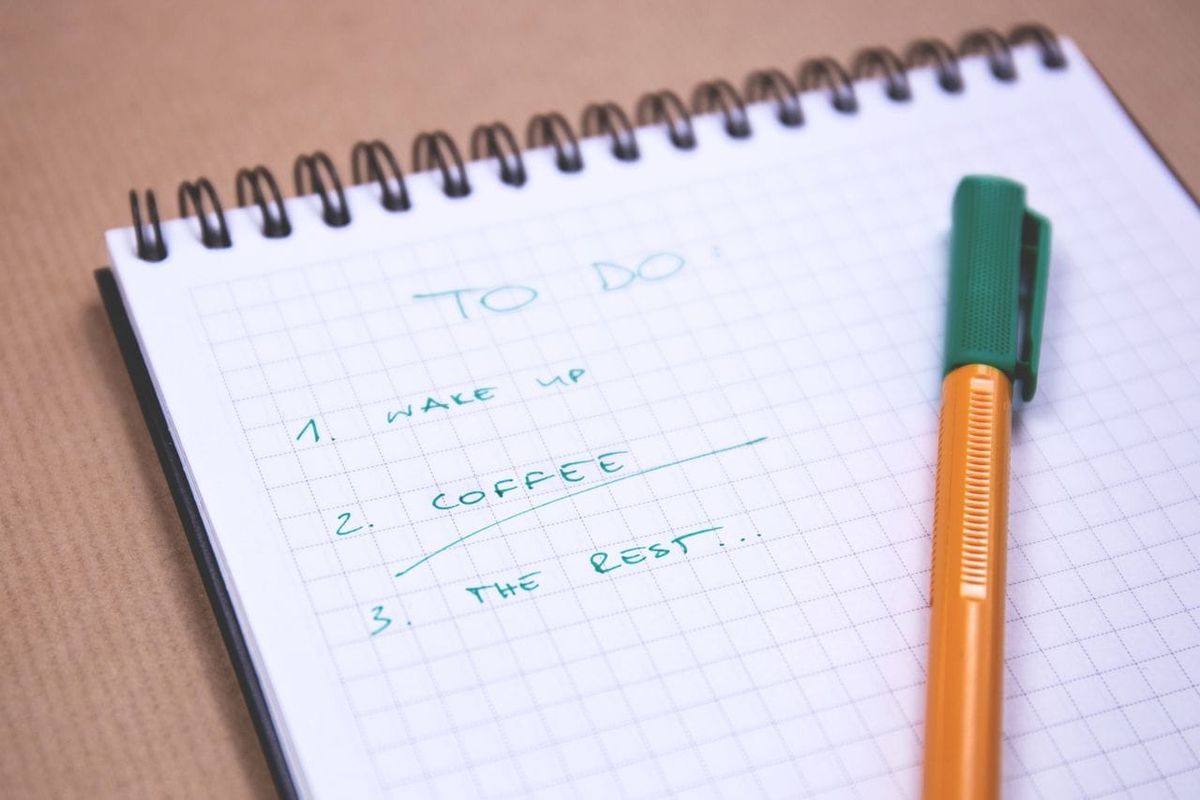
The morning after that YouTube session, I sat at the kitchen table with my phone and emptied my head into the notes app. I turned it into a list of small actions: buying a domain, hosting a website, setting up a LinkedIn profile and writing a business plan. It felt like a fire had started in me.
If I stopped the story there, it would be a lovely one. But the fire didn't carry me to the finish line, because the doubts arrived right behind it. If you made your own late-night list, it might be a course to look into, a market stall to book or a service to price up, and I'd guess the pattern is much the same: a burst of energy, then a wobble. Excitement runs on imagining the finished thing, and the first real step asks for decisions instead, which is exactly where doubt gets in.
Why does self-doubt feel so convincing at the start?
The first voice was "am I good enough?" Then came the cost of starting. Then "who will read or listen to me?" Before long I had a head full of self-doubt, and every one of those thoughts sounded sensible, which is exactly why they work so well.
Looking back, that was fear of starting dressed up as common sense. In my experience, putting things off and self-doubt travel together: the doubt supplies the reason to wait, and the waiting gives the doubt more time to grow.
I can't point to the exact moment one of them stopped me, but I remember the feeling clearly. I wanted to give up and slide back into the same routine of work, television and bed, day after day. Oddly, that was the moment I knew I wanted more, because the thought of that routine carrying on unchanged bothered me more than the fear of failing at something new.
Self-doubt sounds like caution, but it is mostly fear in a sensible coat.
What can you do when the doubts get loud?
That evening I went back to my list and did something I'd recommend to anyone. I wrote down the voices exactly as I heard them, the loudest being "I'm not worthy of special." Next to them I wrote a short promise to myself: start, and write for me. It wasn't about money or an audience, and that took a lot of pressure off.
On paper the doubts looked a bit daft, and a bit funny too. "Not worthy of special" is a big claim to make about someone who just wants to write a blog. So if you try this, don't tidy your doubts up, and keep your promise somewhere you can find it on a bad day, whether that's the notes app or a sticky note on the fridge. It doesn't matter if yours is bigger or smaller than mine, as long as it's in your own words.
When does planning turn into putting it off?
This is the bit I'd most like to save you from, because it cost me. I spent far too much time setting things up when I should simply have started. I made list after list of steps and told myself it was preparation. In reality it was putting it off, just with nicer stationery.
Every time I decided I'd got something wrong, I went back to step one and restarted. I did that several times. I put off properly starting for weeks, then months, and with all the stops and restarts it was probably a year before I really got going. If you can't get started on something you care about, check whether you're in the same loop.
In hindsight, I could always have changed direction along the way. That's what starting does: you get things wrong and find out what actually matters as you go. That's the fun part, and I missed some of it by waiting for a perfect plan. Time is the one thing you can't buy back, and planning can quietly spend it for you.
So how long should you plan before you start? Long enough to know your first small step, and not a day longer. If you're still writing lists after a week, the list has become the project.
How do you start when you feel stuck? A 15-minute first step
If you're wondering how to start when you feel stuck, begin with a clear intention. People say "just start", and I now hear myself saying it too. It sounds too simple to be useful, until you notice how much of your stuckness is simply never having begun.
Here is the one thing I'd ask you to do this week. Set aside 15 minutes, no more.
Write down what you want, and more importantly, why you want it. That's your intention, and it's the start. Then take one small action that moves it forward, however tiny, before you check emails or switch on the TV.
My own first real change was to my routine. Before I checked emails or reached for the TV remote, I worked on my goals and my plan. Only by doing that did I begin to move forwards instead of letting life go by.
If you want ideas for what that first action could look like once you know your why, 10 side hustles you can start while working full time might help.
How do you fit a new start around work, family and energy?
Honestly, this was the hardest part for me: time and energy. Getting into a new routine while balancing work, family, the gym, my own time and my blogging goals took some figuring out. Some days it still does, and on a tired day, struggling to start even familiar jobs is nothing to be ashamed of.
What helped was building a simple routine and treating it as a system rather than a test of willpower. You need a fixed slot and a clear next step. Then make a rule that you do it before the distractions arrive.
The slot can be small and ordinary, such as the 15 minutes after the school run, the first stretch of your lunch break, or the gap between the kids going to bed and the television going on. Choose a time that already exists in your day rather than one you hope to create.
On the days when energy is low, keep the step tiny. Opening the document and writing one sentence still counts, and it keeps the habit alive. If your days are already packed, how to find time for a side hustle when you're already busy goes into this properly.
Frequently Asked Questions
Is it normal to feel stuck before starting something new?
Yes, and for many people it's the most common place to stall. Starting means moving from imagining to doing, and that's where uncertainty and doubt tend to show up. Feeling stuck doesn't say anything about your ability. It usually just means the first step needs to be smaller and clearer.
Why do I keep putting off things I really want?
For many people, it's because the things they want matter to them, which can make failing feel riskier. Planning and tidying lists feel productive while protecting you from that risk. Notice when preparation has turned into avoidance, then use the 15-minute first step above to make a small move today.
How do I stop overthinking and just start?
Give your thinking a time limit and a destination. Decide you'll think about it for ten minutes, then write down the one thing you'll do next and do it. A rough first attempt teaches you far more than another week of going round in circles.
What do I do when self-doubt tells me I'm not good enough?
Write the doubt down word for word, then write a short promise you can read back to yourself. You don't have to win the argument or prove the voice wrong. Seeing the doubt on paper makes it easier to question, and the promise helps you keep going while it talks.
How long should I plan before I start?
Plan until you know your first small step, then begin. For me, endless lists and restarting cost the best part of a year. You can change tactics as you go, so a rough plan that's moving beats a perfect one that isn't.
Before You Go
I wish I'd known earlier that starting is where the fun is, mistakes included. You'll get some things wrong and change direction, and you'll learn far faster than you would by planning alone.
This week, try the 15-minute first step and see what it shifts. Keep your doubts and your promise on the same page so they're easy to find.
You don't need to feel ready. You just need to start small and be kind to yourself on the way.
A new article goes live here every Sunday at 7pm UK time, so there's always something fresh to look forward to.
Got a question about this post, or want to share your own story? Get in touch any time at paul@freedomblogger.co.uk.